


 |  |  |  |  |
|---|---|---|---|---|
 |  |  |  |  |
 |  |  |  |  |
 |  |
2600 YEARS OF UNBROKEN RCORDED HISTORY THAT REFLECTING A LONG SURVIVAL OF THE MOST CIVILIZED OLDEST ANCIENT NATIONS ON EARTH
Sri Lanka


GOLDEN ERA OF SRI LANKA SINHALEASE MONARCHY 600 BC - 1818 AD
The history of Sri Lanka begins around 30,000 years ago. Chronicles, including the Mahawansa, the Dipavamsa, the Culavamsa and the Rajaveliya, record events from the beginnings of the Sinhalese monarchy in the 6th century BC through the arrival of European Colonialists in the 16th century; and to the disestablishment of the monarchy in 1815.
Some mentions of the country are found in the Ramayana, the Mahabharatam and the Lankavatara Sutra Mahayana Buddhism texts of the Buddha's teachings. Buddhist scriptures note three visits by the Buddha to the island to see the Naga Kings. Buddhism was officially introduced in the 3rd century BC by Arhath Mahinda (son of the Indian emperor Ashoka the Great).
Sri Lanka is a country with a unique and a proud historical record of a great civilization, a culture of achievements, spanning over a period of several centuries before and after the birth of Christ, which by comparison cannot be second to any contemporary civilization that existed in the world.




This temple complex dates back to the first century BCE. It has five caves under a vast overhanging rock, carved with a drip line to keep the interiors dry.
The Dambulla cave monastery is still functional and remains the best-preserved ancient edifice in Sri Lanka. This complex dates from the third and second centuries BCE, when it was already established as one of the largest and most important monasteries.
The temple is composed of five caves, which have been converted into shrine rooms. The caves, built at the base of a 150m high rock during the Anuradhapura (1st century BC to 993 AD) and Polonnaruwa times (1073 to 1250), are by far the most impressive of the many cave temples found in Sri Lanka. Access is along the gentle slope of the Dambulla Rock, offering a panoramic view of the surrounding flat lands, which includes the rock fortress Sigiriya,
DAMBULLA CAVE TEMPLE 100 BC - 993 AD / 1073 AD - 1250 AD

The Buddha is depicted in the position of the Dhyana Mudra, the posture of meditation associated with his first Enlightenment.


The Avukana statue is a standing statue of the Buddha near Kekirawa in North Central Sri Lanka. The statue, which has a height of more than 40 feet (12 m), has been carved out of a large granite rock face during the 5th century. It depicts a variation of the Abhaya mudra, and the closely worn robe is elaborately carved. Constructed during the reign of Dhatusena, it may have been made as a result of a competition between a master and a pupil. Avukana statue is one of the best examples of a standi
The Buddha is depicted in the position of the Dhyana Mudra, the posture of meditation associated with his first Enlightenment.

Anuradhapura is one of the ancient capitals of Sri Lanka, famous for its well-preserved ruins of ancient Sri Lankan civilization. It was the third capital of the Kingdom of Rajarata, following the kingdoms of Tambapanni and Upatissa Nuwara.
The city, now a UNESCO World Heritage Site, was the center of Theravada Buddhism for many centuries.
Founded by King Pandukabhaya in 377 BC, it is one of the oldest continuously inhabited cities in the world and one of the eight World Heritage Sites of Sri Lanka.
The Kingdom believed that from the fourth century BC until the beginning of the 11th century AD it was the capital of the Sinhalese. During this period it remained one of the most stable and durable centers of political power and urban life in South Asia. The ancient city, considered sacred to the Buddhist world, is today surrounded by monasteries covering an area of over sixteen square miles (40 km²).
ANURADHAPURA KINGDOM 377 BC - 1077 AD


According to the ancient Sri Lankan chronicle the Culavamsa, this site was selected by King Kasyapa (477 – 495 CE) for his new capital.
He built his palace on the top of this rock and decorated its sides with colourful frescoes. On a small plateau about halfway up the side of this rock he built a gateway in the form of an enormous lion. The name of this place is derived from this structure —Sīhāgiri, the Lion Rock. The capital and the royal palace was abandoned after the king's death. It was used as a Buddhist monastery until the 14th century.
Sigiriya today is a UNESCO listed World Heritage Site. It is one of the best preserved examples of ancient urban planning It is the most visited historic site in Sri Lanka.
SIGIRIYA KINGDOM 477 AD - 495 AD
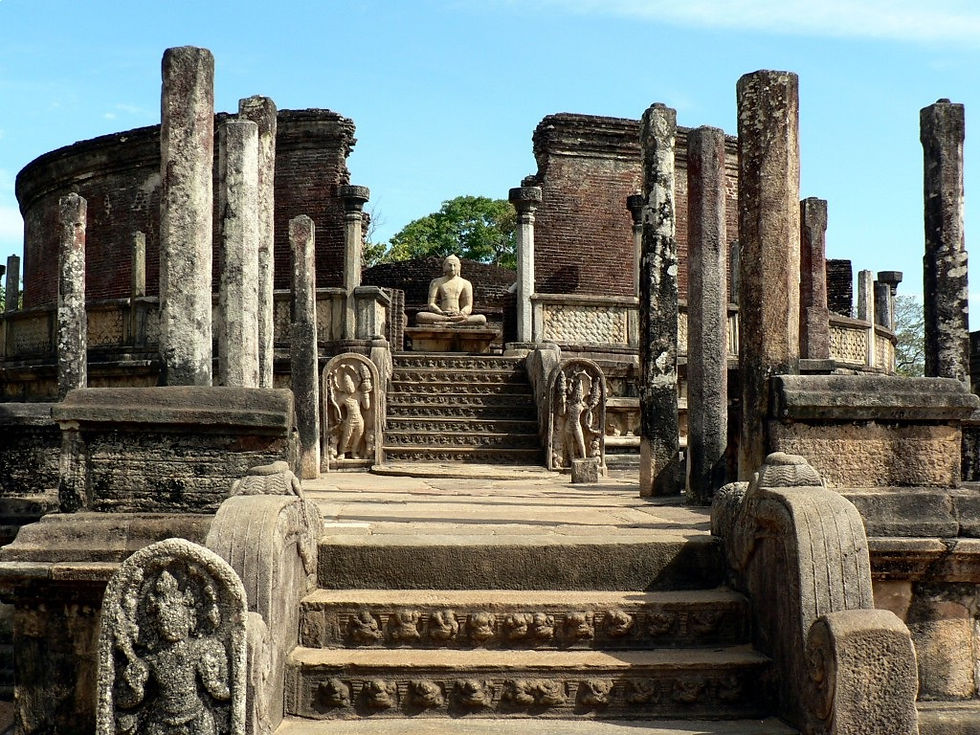


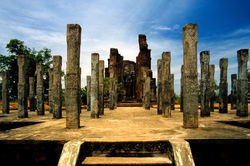
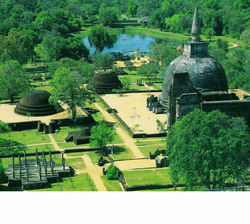
The second most ancient of Sri Lanka's kingdoms, Polonnaruwa was first declared the capital city by King Vijayabahu I, who defeated Chola invaders in 1070 to reunite the country once more under a local leader.. The Ancient City of Polonnaruwa has been declared a World Heritage Site
While Vijayabahu's victory and shifting of kingdoms to the more strategic Polonnaruwa is considered significant, the real "Hero of Polonnaruwa" of the history books is actually Parakramabahu I. It was his reign that is considered the Golden Age of Polonnaruwa. Trade and agriculture flourished under the patronage of the king, who was so adamant that no drop of water falling from the heavens was to be wasted and each was to be used toward the development of the land.The greatest of these systems is the Parakrama Samudra or the Sea of Parakrama. It is of such a width that it is impossible to stand upon one shore and view the other side.
POLONNARUWA KINGDOM 1056 AD - 1232 AD
YAPAHUWA KINGDOM 1272 AD - 1284 AD


Yapahuwa was one of the ephemeral capitals of medieval Sri Lanka. The citadel of Yapahuwa lying midway between Kurunagala and Anuradhapura was built around a huge granite rock rising abruptly almost a hundred meters above the surrounding lowlands.
In 1272, King Bhuvenakabahu transferred the capital from Polonnaruwa to Yapahuwa in the face of Dravidian invasions from South India, bringing the Sacred Tooth Relic with him. Following the death of King Bhuvenakabahu in 1284, the Pandyans of South India invaded Sri Lanka once again, and succeeded in capturing Sacred Tooth Relic. Following its capture, Yapahuwa was largely abandoned and inhabited by Buddhist monks and religious ascetics.

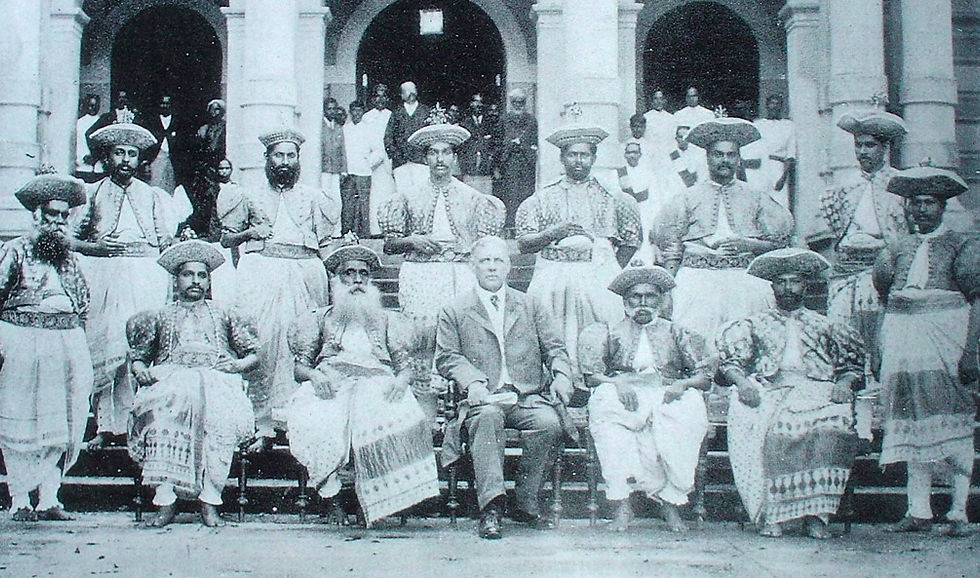

Kingdom of Kandy was an independent monarchy of the island of Lanka, located in the central and eastern portion of the island. It was founded in the late 15th century and endured until the early 19th century. Initially a client kingdom of the Kingdom of Kotte,
Kandy gradually established itself as an independent force during the tumultuous 16th and 17th centuries, allying at various times with the Jaffna Kingdom, the Madurai Nayak Dynasty[1] of South India, Sitawaka, the Portuguese and the Dutch to ensure its survival. From the 1590s, it was the sole independent native polity on the island of Sri Lanka, and through a combination of hit-and-run tactics and diplomacy kept European colonial forces at bay, before finally succumbing to final, British colonial rule in 1818. The kingdom was absorbed into the British Empire as a protectorate following the Kandyan Convention of 1815, and definitively lost its autonomy following the Uva Rebellion of 1817.
KANDY KINGDOM 1469 AD - 1815 AD

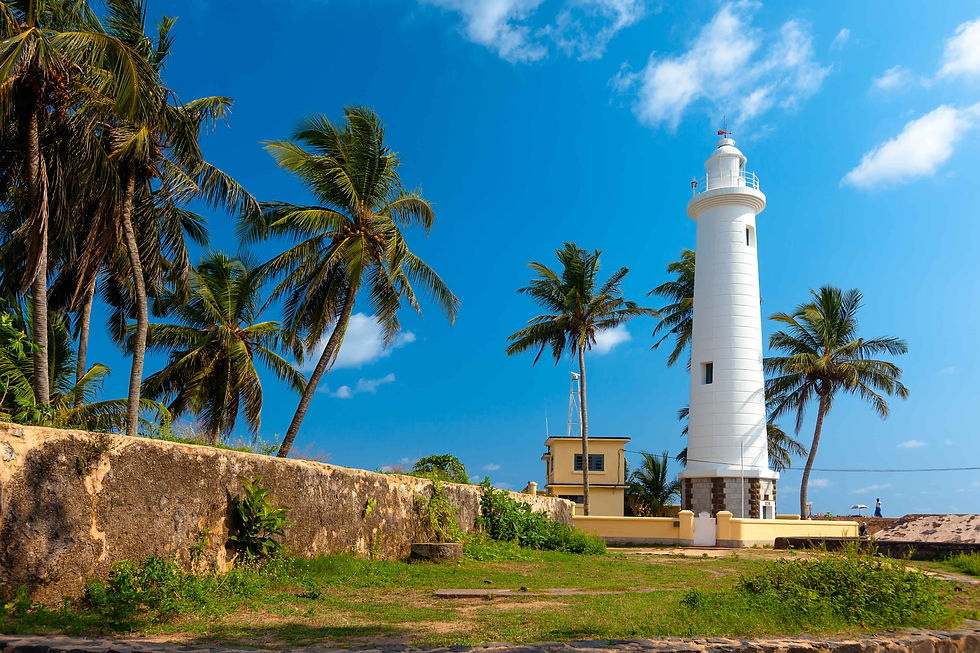


Galle Fort, in the Bay of Galle on the southwest coast of Sri Lanka, was built first in 1588 by the Portuguese, then extensively fortified by the Dutch during the 17th century from 1649 onwards. It is a historical, archaeological and architectural UNESCO World Heritage monument.
Galle’s earliest historical existence is traced to Ptolemy’s world map of 125–150 AD when it was a busy port, trading with Greece, Arab countries, China and others. Its mention as a "port of call of the Levant" is made in the cosmography of Cosmas Indicopleustes.
This is the harbour where the Portuguese, under the leadership of Lourenço de Almeida, made their first landing in 1505 on the island and caused a notable change in developments on the island with their close friendship with Dharmaparakrama Bahu (1484–1514), the then king of the country.
GALLE FORT 1588 AD
FORT FREDRICK 1623 AD


The Portuguese built a fort in Trincomalee in 1623 while King Senarath was ruling the country from Kandy. This fort was captured by a Dutch fleet under Admiral Westerwold in 1639 and in 1665 a new fort was built here by the Dutch to defend against the advancements of the British and the French. The fort was renamed Fort Fredrick. In 1672, the year when the Dutch Republic was attacked by France, Britain, and two German states, the French captured Trincomalee and later they occupied Batticaloa. However soon the French were forced to leave. Trincomalee was important for its large all-season secure harbor. In late 18th century Trincomalee traded hands once more with the French capturing it again and later handing back to the Dutch East India Company (VOC) at the Peace of Paris in 1784. In 1795 it was taken over by the British, and remained a British garrison till 1948. Duri Coastal artillery guns were added during the two World Wars. Today it remains garrisoned by a detachment of the Gajaba Regiment, Sri Lanka Army, but accessible to visitors.
